Wednesday, June 20, 2007

Accident of Birth

By accident of birth, I eat a delicious breakfast this morning, the same as I do every morning: 2 pieces of whole wheat toast, made from organic ingredients by Great Harvest Bakery, and 2 scrambled eggs, delivered from a neighbor who raises chickens in the city.

She looks at the barren cupboard and tries to ignore the gnawing in her stomach, focusing instead on what she can scrape together for her children's meal-- the only one they'll eat today.

By accident of birth, I dress myself in moss-colored capri pants and a brown, v-neck, short-sleeved shirt (taking into account the blue sky today and the prospect of a warm Seattle day). I decorate my neck with a new necklace that I made last weekend.

She regretfully considers the balmy weather outside, then dutifully dons her heavy burka in order to protect her body and face from view.

By accident of birth, I wake my children this morning, rousing each of them from peaceful slumber with gentle kisses on their noses.

She doesn't wake her children, because they are already awake. Last night, their fitful sleep was disrupted by the rumbling noise of the bombs and the rat-a-tat-tat of the guns that seemed to move closer and closer as the family huddled together on the mats of their one-room home, clinging tightly to eachother.

By accident of birth, I will enjoy staying home with my children today. We will play at the park, and then celebrate our friend's 4-year-old birthday with our neighborhood playgroup.

She won't see her children today, since they will have eaten, showered, collected their books, and gone to school by the time she is home from her graveyard shift, one of the two jobs she's had to take to make ends meet.

By accident of birth, I will move freely wherever I want to go today. My only impediment will be the limitation of keeping three children in tow. I will play, shop for groceries, and socialize.

She cannot leave the confines of the compound at Guantanamo Bay, where she was sent as an enemy combatant. She has been detained in error, but will have little chance to prove it, because she lives without hope of ever having a trial.

By accident of birth, I will drive my mini-van where and when I want to today. I may take the bus, but if it feels too far, or the schedule isn't convenient, or doesn't align with Eli's nap schedule, I will opt for the ease and comfort of my own vehicle.

She doesn't have the money for the 1-hour taxi ride into the village where the doctor receives patients once a week, and so she rises before dawn, and begins the long, long walk to the village, her sick baby strapped to her back.

By accident of birth, I type this from my brand-new Dell laptop computer, which is linked to the wireless internet network in my home.

She, on the other hand, cannot even read, let alone type, because her family didn't have the money to pay for "public" school, where education is free in name only, and teachers and administrators exact bribes from families in order to pay their own wages.

By accident of birth, I will pray to God at the end of this day: "God, please heal this world, where there is so much pain and suffering. Be with all children everywhere, and protect them from harm. Help me to do my part to bring justice and peace to those around me, and to all people everywhere. "

And so will she.
_________________________________________
This essay was written as part of Julie's weekly round-table, which solicited essays on the subject of "Accident of Birth." Click here for details.


Monday, June 18, 2007

To Chai, Mother of Hansa

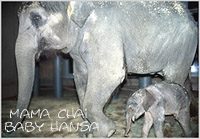
The birth of a baby is usually a cause for celebration. The birth of Hansa, an Asian elephant at the Woodland Park Zoo, was no exception. In November of 2000, when Hansa was born, I didn't have any children of my own. Even so, I avidly read the news of Chai's 22-month-long pregnancy, eagerly awaiting the baby elephant's arrival. When she was born, she was christened Hansa, which means "supreme happiness."

As soon as Hansa was strong enough to receive visitors, I went the zoo to meet her. I was shocked at how much love I saw communicated between mother and daughter elephant as Hansa slowly weaved in between Chai's legs, gazing up at her periodically for reassurance. "You're okay, little one," Chai's return gaze seemed to say, "Mama is right here." I snapped a picture and hung it proudly at work, as if she were part of my family.

It wasn't until a year later that I truly understood the love between a mother and her child. In November 2001, Eleanor was born three weeks early. She resembled a baby bird that had fallen from its nest: scrawny, skinny, and unable to nurse. Still, I was amazed, and a little terrified, at the intensity of my love for this little creature. Like all mothers, I vowed to protect her always, and to love her like life itself.

Last week, Tobin came home from work and asked me, "Did you hear the sad, sad news?" I hadn't. "Hansa died," he said, and the breath was taken out of my lungs. I held back tears. Asking "why," I thought immediately of Chai, and how she was feeling. Does she understand her baby is gone forever? Or did Hansa die in the veterinarian's area, away from the comforting gaze of her mother? Will Chai know Hansa's absence is permanent, or will she think Hansa was taken from her, and live her life in hope of someday reuniting? (In the days that followed, I read that Chai was with Hansa when she died, and that Hansa's body was removed only after Chai left it).

I know that Hansa was only an elephant. But still. There is something universal in the language of grief and loss, in the empathy from one mother to another.

For several days, I found it hard to believe that Hansa was gone. Elephants seem too strong, too large, too substantial to die. I thought, surely Hansa was too heavy, and the angel of death lost its grip trying to take her away.

I remembered Eleanor's growing understanding of death a few years ago, her confusion about the mechanics of life-after-death. "It's not all the way dead yet," she would say if she saw some dead thing (a mouse, a spider, a snail). "It looks all the way dead to me," I'd say, until one day I realized that she thought the entire creature would levitate up to heaven. "I still see its body, so it isn't yet dead," she reasoned to herself.

I get that. On this Earth, I will never understand how one minute a loved one is here, sipping tea with us, laughing at shared jokes, heart beating in rhythm with the universe. And then, blink, they are gone, leaving behind only memories and fading fragrances on clothing.

Reading the heart-breaking accounts of mothers who's babies have died, like Kate's baby Liam, and Lori's babies, Molly & Joseph, I sometimes wish we could invent a grief-sharing program, where mothers could sign up for 1/2 hour slots in which we'd shoulder the mother's grief, giving her a chance to breathe, to shower, to enjoy a chocolate chip, if only for the few minutes before the grief returned with its crushing weight. But I know that's not possible.

We visited the zoo two days after Hansa's death, but avoided the elephant exhibit even though it was open by that time. It felt wrong somehow--disrespectful of Chai. How does one express their sympathy to a mother elephant? Or to any mother who has suffered the loss of a child? "I'm sorry" just doesn't cut it. There is no healing incantation, no magic salve.

Still, I say to Chai, and to Kate, and to Lori, from one mother to another: I see you. I know you had a child, and your child is now gone. I will not forget.

I wish you peace.

Tuesday, June 12, 2007

The Little Things

It's not usually the big stuff that puts me over the edge. Sure, I have problems. But in general, when a crisis crashes into my home like a tidal wave, I find a floatation device. I call family, friends, ask my church for prayer, and depend upon the care of kind neighbors. There's an established system for these things, you see, and I'm grateful for that.

It's the little stuff that sucks me down into a whirlpool of whimpering. It's those tiny leaks in the dam, barely visible to the human eye, yet popping up faster than I can plug with my fingers and toes: the stench of the diaper pail; the wire colander falling apart at the metal seam that I can't seem to remember to replace; the backyard fence, built 2 years ago, but still missing the finishing trellis. You can't exactly call a neighbor in tears, citing your broken colander as the reason. Email Alert: Neighbor in Need! Send shiny, sturdy colanders on the double!

I didn't mind today when my girls dug a giant dirt hole in the backyard, filled it with hose water, took off their clothes, and splashed around in the mud. I even remained cheerful as Sylvia stood over the muddy hole and peed like a common neighborhood mutt. I calmly suggested that Sylvia pee in a far corner of the yard, away from their play area. I mean, let's not insists on the formality of using a proper toilet, since you're already covered in mud.

But when Eleanor retrieved and then dumped the entire pile of discarded clothing into the muddy-and-now-peed-in-hole, my thin branch of parental sanity snapped like a brittle twig underfoot. What to do? Call my sister to rant, and risk the Mom-is-on-the-phone-and-thus-we-must-mob-her-like-night-of-the-living-dead-zombies phenomenon?

Sigh. Deep breaths. This will not drown you. It's only clothes. "Hey Eleanor, there's a tub on the grass over there...I'll put some soap in it if you'd like to be in charge of cleaning those muddy clothes," I said. She took the bait.

And when the clothes were relatively clean (read: clothes were covered in specks of mud instead of chunks of mud), she set to work, repairing my broken sanity with the soft bandage of her cuteness:

"Did you know the AB-DO-MAN is part of a bug?," she asked excitedly. "It's the middle of its body!" She continued, "Bugs have antenna up here," pulling them out of her forehead like telescoping rods. "And guess what else? They have COMPOUND eyes," she said, squishing her fists into balls, placing them over her eyes in a perfect simulation of bug eyes, then dropping her hands and moving her eyebrows up and down at me to underscore their thrilling nature.

Next, Eleanor sat down naked on the deck (watch for splinters, child!) and colored her latest artistic masterpiece: a rainbow-hued rendition of the human brain that I printed from google images in an attempt to satiate Eleanor's brain-curiosity.

"Some artists might color each part of the brain a different color, right, Mama? And some might not. But I'm definitely choosing to," she narrated. When she finished, she pointed to different areas: "Where do you want to live, Mama? Would you like to live in California?" she asked, pointing to the temporal lobe. "Or," her finger now on the cerebral cortex, "how about in Oregon with Gramma and Grandpa?"

After a while, Eleanor washed up and came inside to help me prepare dinner. At first she ran back and forth, from the kitchen to the backyard (a mere 5 feet away), issuing reports on the behavior of Sylvia and Eli. "Uh-oh, Mama, BAD REPORT! Sylvia is putting mud on Eli's shirt..."

But then Eleanor spied my decrepit colander on the counter, and she hunkered down for her best work. A while later, with fanfare, she presented the colander to me, with countless twisty ties now holding the wire mesh to the metal frame.

I was happy. Like I said, it's the little things.

Monday, June 04, 2007

Tree Climber

My Eleanor loves climbing trees. "No tree shall be left undisturbed," seems to be her unspoken motto. She sees a tree-- at the park, in your yard, at our church, at her school-- and she is drawn to it like a politician to power. It must be climbed.


She doesn't climb trees to conquer them, although she is certainly proud of her extraordinary climbing prowess. She climbs for other, more social reasons: to discover and examine snails and slugs, smell the blossoms, befriend or scare the squirrels (depending on her mood), and heckle the passersby on the sidewalk from behind the safety of our fence. At bathtime, I discover sticks, twigs, blossoms and berries, hiding in Eleanor's hair like a secretly located nest built exclusively for birds in the witness protection program (you know, those cute little finches, who rat out the dastardly crows).

Eleanor is completely fearless in her climbing ambitions. "I know how to climb onto the top of the garage," she announced to Tobin last week, and then she demonstrated her method, step by step, using our magnolia tree as her ladder--"I put this foot here, and hold on with this arm here"-- until she proved that indeed, she can lift her leg onto the garage's roof. She didn't hoist herself up, of course, at least not while Tobin was watching, since he treated her to a free lecture series entitled, "The Certain Danger And/Or Death Awaiting Those Foolish Enough to Climb Onto the Garage." Tobin warned me later, "If Eleanor goes missing, she's likely on the roof of the garage." Okay, thanks for the tip.

Last summer, all three of my children were baptized. After the ceremony, our extended family and several friends came to our house to celebrate with-- what else?-- Indian food take-out. The girls had selected a cake from the local bakery, complete with a Mickey Mouse Fire Truck topper. ("Well, it's at least in keeping with the water theme," Tobin said). Take-out devoured, cake eaten, and the beauty of the ceremony reminisced, Eleanor shed her white baptism dress like a snake molting its skin in fast motion. (See photo at right of dress hastily deposited into our backyard bush). And then she went-- you guessed it-- up, up, up to the top of our maple tree, where she perched herself on a high branch and settled in with her newfound holiness.

During all of this tree-climbing, I've only encouraged Eleanor. When I want to say, "be careful," I say instead, "are you feeling safe up there?" When Eleanor answers "yes," I avert my eyes to a safer place and keep my mouth shut. I've smothered my fear-of-falling worries with the certain knowledge that there is value in healthy risk-taking. And really, I've come to love her love of tree-climbing. I love what it says about her: she is agile, confident, curious, strong. What more could I wish for my oldest girl?

We should not have been surprised when, today, while climbing our apple tree, Eleanor experienced the curse of gravity as she crashed to the ground. Really, I wasn't surprised that she fell. It was bound to happen at some point. Rather, I was surprised at how I felt: not overly worried (but appropriately motherly) about Eleanor's injuries (a ripped skirt and we *think* a sprained wrist; we'll see the doc if she's still complaining about it tomorrow), but instead, very concerned that Eleanor will stop climbing trees. Because it seems to signify more than simple tree-climbing. Eleanor might learn that, in fact, she can't do all things she sets her mind to do. That her success in this world doesn't only depend on her ambition, but a multitude of external limitations: physical, structural, and political.

I'd like to postpone this lesson, thank you very much.

I like Eleanor's world-view, just the way it is: where every tree is hers to climb.

Wednesday, May 30, 2007

It's All About Me

My new friend over at Slouching Towards 40 tagged me for a "10 Interesting Things You Don't Know About Me" assignment. Here in blogland, for those of you not in the know (this refers to my darling Grandma (pictured at left) who, last weekend, told me that she enjoys reading my blobs-- not that I am any better-- just 8 months ago I didn't know the meaning of the word blog, and even when I became edu-ba-cated I certainly didn't think blogging was something I would enjoy doing), these little assignments are called "Memes," and the idea is that one completes the assignment and then tags a few unsuspecting, piteous suckers honored friends to do it next.

To be honest, I am not a big fan of the Meme. First off, who likes doing an assignment? The very word evaporates my creative juices like lemonade spilled on hot cement. Second, I worry a tad that readers may discover that I am think I've become self-absorbed... does she really think we care about any of these useless facts about her life? (Cue picture of me me MEEE to the right).

These objections aside, I really enjoy
Slouching Mom's writing, which is not only poignant, thoughtful, and insightful, but is well-composed and clearly informed with a background in literature. (This is a rare combo found here in blogland, where one could waste an entire year, sitting in front of the computer, munching on chips, drooling onto the keyboard with glazed-over eyes spend an entire week reading cutesy journals that do nothing to provoke self-reflection, action, or change. Thus, out of respect for Slouching Mom, (with yet another link, just in case you haven't taken the bait yet) I hereby accept this assignment, and am flattered to think that at least one person would like to know TEN (gulp) interesting (not even counting toe-jam and birthmarks!) things about me.

Since I tend to ramble (no kidding, you say, just look at your mammoth introduction... just write the stinkin' Meme already!) in a futile search for meaning (and in a vain search for good endings), I will post this list with handy bold headers (just one of my many, MANY amazing computer skillz, to borrow a great word from
O The Joys; gee, I really am a marvel!) so those of you who only mildly care can quickly skim through the text and then get on with your life. I said, get on with your life! Already!

Here goes.

#1. I have epiphanies in the shower.
It's true. The shower is where my thoughts are clearest. When I was in law school, I had two epiphanies in one single showering. I know, it's amazing! The first 'piph was simple, yet profound: I don't have to do anything that I don't want to do. You go ahead and laugh now, but this really was a life-changing thought. I stopped saying yes just because I thought I should, and started saying no when I wanted to say no. You should try it yourself sometime when you find someone pressuring/guilting/nagging you to do something you don't want to do (especially someone you really love/respect/want to love you). My current line is, "I'm trying to strengthen my NO muscle, so I think I'd better use this opportunity to say No thank you." Totally cheesy, but I've gotten good results, usually something like, "okay, I can respect that."

The second 'piph (and you can file this right now in the too-much-information category) was that birth control pills are effective for me only because they completely and totally obliterate my desire to have sex. Kill it like a child stomping an ant. Like Roadrunner dropping an anvil on Coyote. In one shower moment, I changed the course of my marriage. Goodbye pills! Hello hubby!

#2. I still play silly fate-games left over from childhood.
I don't know what else to call those games where you make silly agreements with God or Fate or Whatever in order to foretell the future. For example, you might be waiting at a stop light and say to yourself, "If this stop light turns green within the next 10 seconds my marriage will last forever." Or, you might choose your grocery line thinking, "If I beat out that lady in plaid in the next aisle over, then I'm definitely getting that promotion at work." This is a good game because when you win, you can be happy, and when you lose, you can just say "that one didn't count," and make up an answer as to why. I'm pretty sure I'm not the only one who does this. At least I don't make major decisions based on this method. Cue picture to right.

#3. I think God's best work is the nape of a baby's neck.
There's not much to add here. If you've ever rested your eyes upon the silky goodness that is the nape of a baby's neck, then you know what I'm talking about. Plus the word nape is fun to say, like the the knights who say Ni!
Nape! Nape! Nape!

#4. I am NOT a fan of the bra.
Again, feel free to dispose of this tid-bit in your too-much-information shredder, but most nights, when I know I'm home for the night, my first task is to rid myself of the pesky bra. Being one who loves routine, you'd think I would deposit said bra in the same place every night to assist in morning-time dressing. But no. Most mornings you can find me searching the house for the lost article.
Last fall, when I was really fired up about global warming (apologies for the unintentional pun), a local political hopeful came a-knockin' at my door to solicit my support. Tobin answered the door. Knowing I'd want to grill the man regarding environmental issues, Tobin located me in the kitchen, where I was cooking dinner. Completely oblivious to the fact that I was, shall we say, home for the night, I went to the living room, invited in the political stranger, and volleyed the conversational ball back and forth for about 30 minutes. Only after the candidate left did I really look at the couch on which I'd been sitting. There. It. Was. In all its Size Gordo, Nursing Mother splendor. It had been sitting beside me the whole time. Ahem.

#5. I once composed an email about poop and accidentally sent it to my law professor.
Here's what happened. My friend Karen was schedule to have a colonoscopy. She sent a detailed email to me about the procedure, describing the elephantine laxatives that she'd ingested in order to clear her system in preparation. I sent a detailed email back to her, outlining my full library of knowledge about poop and treatment for sore bottoms, along with many, many off-color jokes about her upcoming appointment. I pushed send, and the funny little email traveled through cyberspace all the way to... MY LAW PROFESSOR. Don't ask me how. I received a short email in response: "Ally, I don't think you intended this email for me. Sincerely, Your Dignified Professor." Or something like that. I shrank, shrank, shraaaank-- in Fred Flintstone fashion-- until I became no bigger than an infinitesimal speck of nothingness. And then I laughed myself silly.

#6. In two separate incidents, I've witnessed two car-pedestrian collisions.
I think this is a really weird fact about myself. The first incident is chronicled here, so I won't repeat it. The second time happened like this. I was grocery shopping with my sister and Mama. I don't remember my exact age, but I'm guessing I was in the third grade or thereabouts. We were in the parking lot, and looked up as we heard the high, metallic sound of screeching brakes. An elderly man had attempted to walk across a four-lane road, on his way from the nursing home to the grocery store, and a car didn't see him in time. He was hit. My Mama dropped the groceries and told my sister and I to stay put. She ran to the scene and applied pressure to the man's gushing chest wound. The ambulance came, and we went home, my Mama's front soaked in blood. We added Mr. Vanvorest (as we learned he was named) to our evening prayers. He lived, but I really don't know for how long. As a child, I prayed for that man for years and years, each and every night. My sister and I wondered aloud about Mr. Vanvorest last year, and I said he was probably very successful after that crash, as he was buoyed up by our prayers long after he was recovered. Or maybe we prayed for him after he'd been dead for years. We never found out. Either way, I'm sure it didn't hurt. (Forgive me, Mr. Vanvorest, for using the phrase "didn't hurt" in the same paragraph as the description of your accident).

#7. I had a mild case of Rheumatic fever when I was young.
This fact is a cheater, actually, since even I don't find it particularly interesting. So this Meme is now officially called "Nine Interesting Facts and One Boring One." I highly recommend that you skip to #8. I'm not sure anyone cares except my dentist. For years I endured teeth-cleanings and no one even asked whether I'd ever had Rheumatic fever. Then, a few years ago, I went to a new dentist and suddenly it matters. Evidently Rheumatic fever can cause a weakening of the heart, and somehow during teeth cleaning your body is susceptible to infection (or some such thing), so now each time I get my teeth cleaned I must ingest a jillion antibiotic pills one hour in advance. Now you know.

#8. I would love to be a writer, but I don't want to ruin something I love by getting paid to do it.
That's why I sarcastically wrote this, in order to discourage certain un-named family members from requesting blogs on specific topics, or toppings, like a made-to-order pizza. See comments above (in over-long introduction) regarding the ill effects of assignments.

#9. I am a tosser, not a keeper.
I hate clutter. When the kids aren't looking, I surreptitiously purge their belongings. Tobin's, too. Thus, it is difficult to explain why I said "uh, okay" when Eleanor asked if she could bring home this gem (pictured at left) from my friend's house on Sunday. (For the record, this friend had selected this lucky owl to be part of a garage sale; I don't think anyone has actually used this cookie jar since the 70s.) Now this thing, this hideous piece of earthenware, this offense to potters everywhere, is living in my house! The kids can't even play with it since it is breakable ceramic. Please send your ideas on how I can rid myself of it. Please! Send! Ideas!

#10. This year I received the best compliment of my life.
My dear friend, who is a bona fide writer (as you'll notice below, dear readers) wrote a letter to Tobin and I after visiting my family for several days. I was completely blown away by this compliment. I never knew that this "welcome" (the kind of love that St. Benedict called hospitality) was what I aspired to, but once I read his beautiful words, I thought, "there is nothing in the world that I would rather have said about me."
Here 'tis:
You are friends because you continually say "come." Inside your house, I'm opened up and challenged because there is no prescription, no program or premeditation. No secretly inscribed recommendation. The doors are opened and I can hear the word "come." I find myself listening-- reflecting. Things are left undone or in remainder. Solving and "cleaning up" have no place in what I feel is a friendship swimming (because it can't be grounded) in the vulnerable verb "come." It's more than a mere welcoming. The idea of welcoming falls short because, in a sense, you have already let us in. And that is a gift that cannot be returned, only accepted... again and again.
And finally, just for kicks, you get a bonus picture of Eli, wearing Sylvia's hat on his head and Eleanor's sandals on his hands. Oh, how I love this baby.

And now, I tag Seattle Mamacita, bgirl, little monkies, and Nancy. And if anyone else is so inclined, consider yourself tagged as well.

Monday, May 21, 2007

Dot-to-Dot

This morning after breakfast Eleanor and Sylvia nestled in at the dining room table, surrounded by markers, pens, pastels, and paper. After completing various drawings-- a pepper tree with yellow, red, and green peppers; a lemon tree with a large base and a tiny top, as if viewed by a tiny ant marching in the verdant grass beneath the tree-- Eleanor constructed a Dot-to-Dot for me to complete. "Don't try to guess what it is. It's going to be a surprise for you," she told me. She drew chubby blue dots adjacent to numbers, some written backward, struggling to find their way through a dyslexic fog.

The parallel to my life gently floated into my head like a Forrest Gump feather.
____________________________

1. DOT: A Typical Lunch

Today for lunch we ate corn bread, clam chowder, and baby carrots. Or I should say, I ate those things. I also served those things to my children, with varying success. 17-month-old Eli enjoyed the cornbread for a few bites, then decided, "hmm, this no longer pleases me." Like any baby who's completed Toddler 101: Asserting Your Independence in a Grown-Up World, he first threw the offending corn bread onto the floor, and then swept his hands back and forth on his high-chair tray to ensure the complete annihilation of the remaining crumbs. He turned his attention to the table, scanning for something desirable. "Mo, mo, mo," he said with his mouth and hands. "More cornbread?" Eleanor asked. "No." "More chowder?" I asked. "No." "More carrots?" Sylvia asked. "No." "I think he wants more cornbread," Eleanor stated, obtusely ignoring the mounting evidence. "I don't think so," I said, tapping into my dwindling reserve of patience. "I think he wants one of those forks," I said, pointing to the pile of forks that I'd placed in the middle of the table, just in case anyone wanted to eat their cornbread in a civilized fashion. Hearing "fork," Eli said "yeah," and I added in my head, "because I want to poke my eye like the last time I wielded a fork."

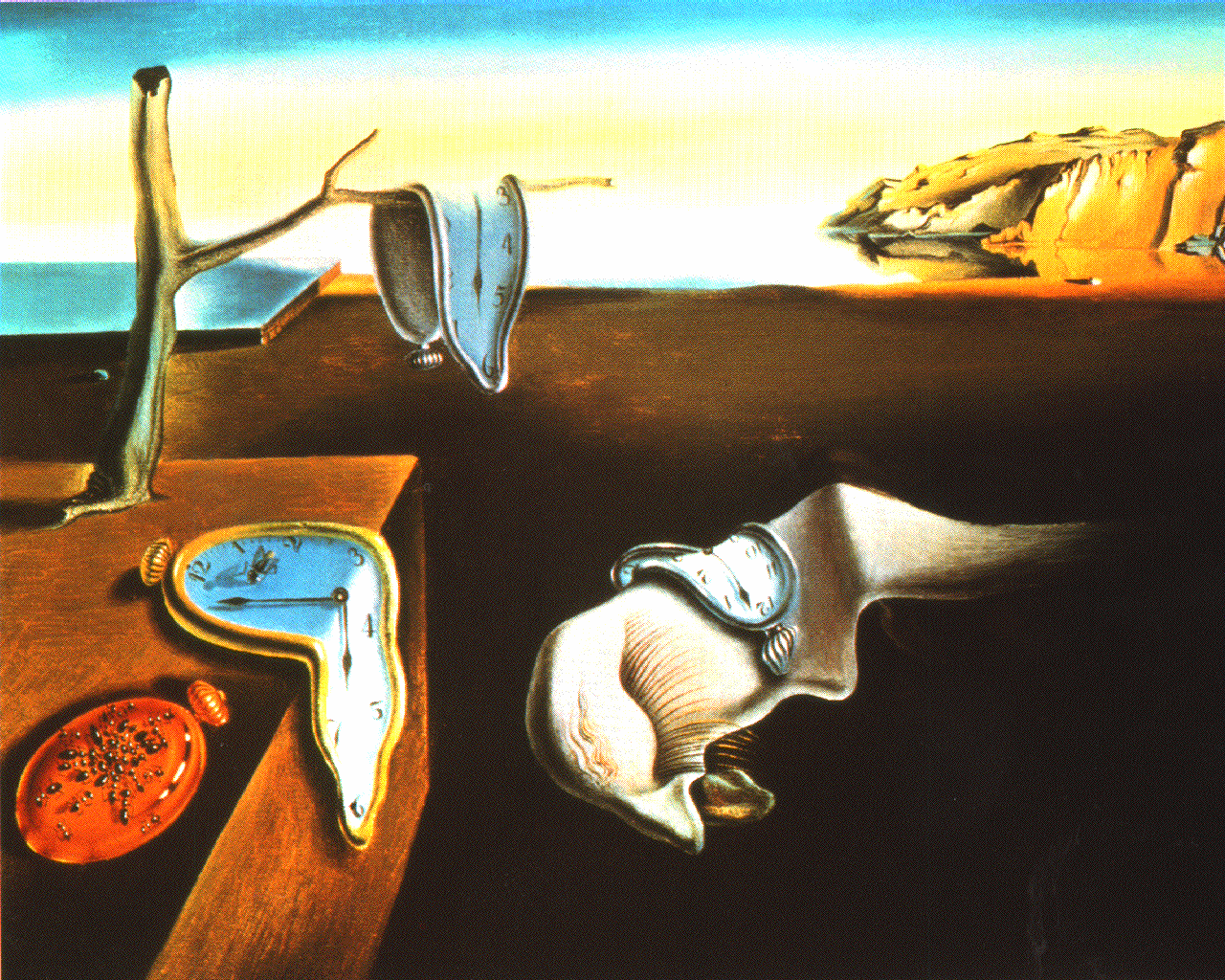
Eleanor reached over and placed another piece of cornbread on Eli's high-chair tray with an enthusiastic "Here you go, baby!" Deftly executing the Self-Assertion plan once more, Eli responded quicker than the missile defense system, propelling the corn bread onto the floor. "That's NOT what he wants," I hissed at Eleanor, my voice devoid of kindness. "You're using your mean voice," she replied, and slid off her chair like Dali's Melting Clocks. Deep breath. "Eleanor, I'm sorry I used a mean voice. How about if I try not to use a mean voice and you try to listen when I speak to you in a normal voice?" "Okay," sniffled the little 5-year-old pile on the floor.

I foolishly gave Eli a fork and let him attempt to eat his baby-food-squash with it. A few seconds later, Sylvia howled like a wolf, accenting the beat of her song by pulsating her palm over her mouth. Soon Eleanor and Eli joined in. As the volume crescendoed, my head wound up like a mexican top, then flew off my body with a whiiiiiiz. Someday it might be sited, perhaps by a satellite somewhere in outer-space.

2. DOT: Urban Turkey Herding

Most city-dwellers don't t expect to have much contact with turkeys. But two springs ago, when Sylvia was just a wee babe, we heard some strange peeping noises coming from outside. We rushed to the window to witness Gene, our crunchy neighbor from the Co-op house, flapping his arms, herding 20 baby turkeys down the sidewalk. That day the girls got to pet baby turkeys, and the Turkey Fan Club was officially formed.

This year was even better, because both girls are big enough to help herd the turkeys. For four weekends in a row, Tobin and the girls met Gene at his garage to let the baby turkeys out for a little free-range time. Mind you, these turkeys are bound for a Free-Range Farm. Gene just raises them when they're babies. The turkeys cozy up in a big nest in Gene's garage, soaking up the rays from the heat lamp above. Once a day Gene shoos the turkeys from the garage, and they stretch, peck, and strut down the sidewalk, pecking at whatever weeds, plants, and bugs they can find. When the baby turkeys look tuckered, Gene solicits the help of Eleanor and Sylvia to get them back into the garage. Completely fearless, Eleanor chases down a turkey, grabs it gently, and carries it back to the garage. When a turkey doesn't cooperate, Eleanor sweet-talks it: "Ahh, c'mon, little turkey, come with me so you can go with your little friends in the garage...You don't want to miss out on all the fun they're having in there!" Sylvia, just 3, mostly provides moral support. She's afraid to pick up the turkeys, but she forms a human blockade to assist the round-up.

Now that they're big enough, the turkeys have moved out of the neighborhood to the farm where they'll spend the rest of their lives. I'm guessing they'll be sold sometime around, say, Thanksgiving, but I haven't confirmed any of that. Last night, thinking about the turkeys, Eleanor said, "You know, Mama, even though the turkeys live far away now, they will never be far from Gene. Gene has the love of the turkeys in his heart."

Not wanting to offend Eleanor's tender seriousness, I choked back a laugh as Tobin whispered, "...and in his stomach."

3. DOT: Not Quite The Last Emporer, Yet

My litttle Eli, 17-months old, is still nursing. I could pretend to be annoyed, citing all the reasons why I'd like him to wean: 1) I'd be able to leave all of my children with Gramma and Grandpa and abscond to a romantic weekend getaway; 2) I'd have dinner dates with friends, unrestricted by what time Eli needs to be put down for bed, instead of rushing home like Cinderella (with Keens as my dainty glass slippers); 3) my body would finally be my own again, and I could start making demands of it for a change; 4) I might finally shed the extra 25 pounds my body has been hoarding to protect my breastfeeding baby from starvation in a food-shortage. But really, I'm just not all that annoyed by any of these things. Especially when I balance them against the pure, sweet joy that I feel when Eli snuggles in to nurse.

Raising three small children, I've come to treasure the few moments per day that I get to spend one-on-one with each of them. Eli's nursing time is mine, and mine alone. (Not counting those hellish mornings when the girls wake up early and I have to nurse Eli while they caress his head, poke him with books they're "reading" to him, and otherwise distract him into a tizzy). This is our time for inside jokes, shared laughter, and cozy nuzzles. While Eli nurses, I hold out my hand, palm straight, and Eli knows what to do: he gently slaps it, showering me with the softest high-fives. Eli pats my nose with his tiny index finger, waiting for me to provide the commentary. "Mama's nose," I say. Then his finger finds his own nose and taps it. "Eli's nose." He smiles. He reaches up and gently pets my hair. "Mama's hair," I say. And so on. In this crazy, loud house (see Dot #1), I savor these quiet, gentle moments, swishing them around in my psyche like a good wine on my pallet.

After all, when is the next time that I will enjoy a baby's chubby legs, curled around my middle like a napping cat, velvety-soft hands patting me like a kitty's paws kneeding biscuits? Never, that's when! Never is a long time, people! So I know you'll forgive me if I stretch this out just a little longer. And please don't ask me when I plan to wean Eli, because really, really, I just don't know.

4. DOT: Shortage of Iron-- In Blood but Not Will

Our daughter Sylvia is tougher than jerky. Physically, that is. Driving to a doctor's check-up when she was two, Eleanor warned her that she'd have to get shots. Unfazed, Sylvia boldly proclaimed, "I not cry, Mama." I told her it would be fine if she cried; shots do hurt and there's nothing wrong with crying when you're hurt. When it came time for shots, she jutted out her jaw like Jay Leno, stared down the needle, and refused to shed a single, solitary tear. She didn't even blink. She calmly turned her head to me and said, "See Mama? I not cry."

As you know, our Sylvia is an omnivore in the broadest sense of the word. We've wondered about the reasons: Psychologic disorder? Disciplinary issue? Poor parenting? None of the options were particularly appealing.

Then the doctor called and said she'd consulted with some colleagues and determined that Sylvia needed a blood test to determine whether she has an iron deficiency. I explained the procedure to Sylvia, and she listened, unperturbed. In the examining room, she looked so small and vulnerable laying on the high white-paper-covered table. As the nurse warned her that the needle was coming, I gently turned her head toward me. I placed a yellow gummy bear into her mouth, and she smiled happily just as the needle found its vein. In stark contrast, Eleanor paced around the table, lip quivering, stopping just short of crying, saying-- unnecessarily-- "it's okay, Sissy; it's okay." As Sylvia's blood oozed out into the vile, she asked me, "Can I look to see the blood coming out?" "Sure!" I replied.

One day later the doctor told me what we should have already known: Sylvia's blood is deficient in iron. We breathed a sigh of relief, thinking that an iron supplement is much easier than years of sessions with a child psychologist.

__________________________________

There it is. The chubby dots, making up a sketch of my recent days. I take a pen and draw connecting lines between the dots, but I still can't quite make out the final shape. I squint my eyes, hoping to decipher the alternate images like I'm viewing a stereogram. What's that? Is it paradise? A glimpse of madness? I guess it's a surprise.

Monday, May 14, 2007

Crinkly Eye-Liner & Other Mysteries

A few years ago, I was peripherally part of a conversation in which my friend C asked my friend K about a little eyeliner problem she was having. K works at Nordstrom and is in the fashion scene of make-up, clothing, and other things mostly foreign to C and I. C wanted to know, "Is there an eyeliner out there that doesn't crinkle when I put it on...You know, one that doesn't go bumpity bump bump over my wrinkly eyelids like a plane struggling to land?" A few short years ago, the answer didn't apply to me, so, while K expounded an Eyeliner Treatise, I focused on other thoughts, in the exact way that I tuned out the C-section part of our birthing classes, arrogantly thinking, "this will never apply to me, I am having a vaginal birth!"

Just as I regretted my inattention when I found myself in the Operating Room, the doctor poised to slice my belly after a 24-hour labor, lately I'm wishing I would have taken astute notes during K's Cosmetics Advice Session, because I'm struggling with my own rough liner landings. My eyelids crinkle up and my line ends up looking like Sylvia (my three year old) applied it for me. (Of course, if you know my Sylvia, you'd know that she'd never actually apply my eyeliner, because, ahem, there wouldn't be enough of it left after she finished snacking on it).

Then there's this: Last weekend our family went to our church retreat. The retreat center is famous among the United Methodist kids for its enormous rope swing. You follow a winding dirt road to get to camp, and at one point, Eleanor thought we were lost, so she offered this helpful advice, her eyebrows scrunched in concentration: "Okay Mama listen-- you'll know you're getting close when you see the giant rope swing. Just look for the swing Mama and you're almost there!" Okay, will do... I understood why she said this, because, even from an adult prospective, this swing is a sight to behold. Three stairs lead to a 7-foot platform, which is perched on the flat part at the top of a sloping hillside. A round saucer, about a foot in diameter, is attached to the end of the chubby, long rope. It takes two people to retrieve the rope and hoist it up, between the legs of the person waiting on the platform. Once positioned, the swinger jumps off the platform and enters the adrenaline rush of swing heaven. If you weigh a lot, or get a little running start on the platform, then you have to be careful on the back-swing not to smash your head on the platform like a gooey Halloween pumpkin. When not in use-- and this means supervised by a Responsible Adult-- the rope swing remains padlocked against a giant tree nearby. You get the picture.

Last year, I declined the swing. "I'm the mother of three small children," I thought, "do I really need to take such unnecessary risks?" Eleanor went on it then, a small speck in the vast air, shouting gleefully in her 4 year old voice. This year, Eleanor did it again, and again and again, scaring the life out of me and the Responsible Adults by performing various "tricks," no doubt inherited from Tobin, who, on his turn, made a special point to dismount with a back flip or give the next person waiting on the platform a high-five on the back-swing.

So, this year, I gathered my courage, seasoned it with Eleanor's encouragement-- "come on, Mama, you will have sooo much fun!"-- and slowly made my way to the top of the platform as if shuffling toward the gallows. The first time was fantastic! I had vastly underestimated the initial whooosh I'd feel coming off of the platform, that spot right before the rope caught my weight and sent me propelling forward over the lush ferns and foliage below. I let out a little yelp of joy, and only thought just a teensy bit about whether I'd smash my face into the dirt upon dismount. When I was done, I went to the back of line, told an 8-year-old that no, she couldn't have cuts, and waited my turn to go again.

The second time: not so fun. The saucer got caught on my leg before I was ready; it didn't get firmly between my legs like it was supposed to. I felt myself being pulled from the platform but knew that the rope wouldn't catch me. The saucer slipped out, I half-jumped-half-fell from the platform, and I landed in the dirt far, far below. I sprang up like a jack-in-the-box, eager to demonstrate my well-being. I was fine at first. I even went back on the swing right away to prove it had no power over me-- me, scared to go again just because I just plummeted to my near-death? Pshaw! Bring it on. (Read: Oh dear God don't let me fall again!) But by the end of the day I was hobbling around, barely able to walk. The next morning my foot had improved enough that I no longer felt a trip to the ER was required.

Here's my point, friends: I think I'm getting a little old.

It seems a younger version of myself wouldn’t have fallen off that platform, and wouldn’t have been hurt in the landing. But maybe it’s just the sneaky, creeping gray hair and the crinkly eye-liner fooling me into using age as an excuse, because truthfully, I’ve always been a bit of a klutz.

But here’s another shred of evidence: I am having a miniature mid-life crisis. Well, maybe not a crisis so much as a Mid-Life Review. As you may have noticed on my fancy-pants blog page, I recently read “Mountains Beyond Mountains,” by Tracy Kidder. It is the story of the life of Dr. Paul Farmer, a genius doctor who devotes himself to healing the sick in Haiti, and in other poverty-stricken, underserved areas of the world. His philosophy: People are sick. I am a doctor. Every life is valuable. It is one of those stories that make one think, “Wow, good for him,” and then, “Phew, what a comfortable little life I’m leading…what else could I be doing?” Is this-- my current career-- how I want to spend my one “wild and precious" life?

I’m pretty sure the answer is no. Or at least “I don’t think so.” But the question remains, then what? What?

When I finished the book I warned Tobin that it isn’t a book that I’ll be finished with once I place it back on the shelf. I said it was one of those turning point books; one that inspired big changes, which might someday provide a point of reference such as, “Well, you see, back in 2007 I was reading this very inspiring book…”

We brainstormed a bit, and the next morning Tobin—Super Husband that he is—told me that he’d done some research last night and found out that he could definitely get a job in India. Just in case I was thinking that’s where I should go in order to lead this meaningful life. He was earnest. I have to say, it’s nice to be taken seriously; to be so unconditionally supported.

I spoke with my dear Grandmother on Saturday. At 86, she has more energy than most people half her age—indeed, more energy than I think I’ve ever had. When I asked her what she’d been up to she mentioned that she’d mowed only part of the lawn that day, but she hadn’t finished it because, well, for some reason, the lawnmower just got too hard to push. She figured that the blade had been set too low. I stifled a laugh, and then a cry, as I thought, perhaps it’s because you’re 86 and your lawn in enormous?

I hope it was just the blade setting, because, as my Grandmother told me a couple of years ago, “Getting old stinks.” You know, what with the crinkly eye-liner and all.

Tuesday, May 08, 2007

A Prayer

Today I was reminded that it is sometimes scary to be a child.

It was an unseasonably warm day in Seattle. It was warm enough that I sanctioned the donning of swimsuits, and even turned on the little sprinkler in our postage-stamp-sized back yard, through which the girls joyfully frolicked, choreographing their own dance that cried out, "O, Glorious Summer, Quickly Come!" Eli napped peacefully inside, and I sat on the deck, attempting to read a book. Every other sentence, Eleanor peppered me with some remark, most of which demanded some sort of response beyond a distracted "uh-huh." Um, I'm trying to read, you know... please just quietly share your summer-time exuberance with your sister...

Eleanor turned the little plastic slide into a water slide with the assitance of the trusty garden hose, in complete and flagrant breach of the safety warnings, which stated that one should never, ever use water on this slide. But really, she is so oversized now compared to the toddler slide that I felt there was no danger. Though I did consider for a brief moment how stupid I'd sound explaining my rationale to the social worker at the ER: "Yes, it's true that I'm an (gulp) attorney... Yes, I did read the warnings on the label. Yes, I ignored the warnings in favor of a little time to read a book in peace!"

At one point, Eleanor skidded to a stop, half-way down the slide because-- BAM!-- an important question landed in her brain like a burning-hot meteor from outer space: "Mama, will our house ever burn down?"

"Well, I don't really know the future, sweetie," I replied, "but probably our house won't burn down because we try really hard to keep it safe here. But would you feel better if we talk about a fire-escape plan this Saturday?" (For some reason, this seems like a weekend activity). She said, "Yes." I told her that I remember when I was little, I worried a lot about my family's house burning down.

I didn't mention that I actually still worry quite a bit about it, sometimes laying in bed when I'm trying to get to sleep, mentally rehearsing exactly how I'll collect all three of my children and get them out if there is a middle-of-the-night fire. (Hmm, if I tuck my PJ top tightly into my underwear I can stuff Eli down my shirt; Eleanor can hold onto my neck in the front and help keep Eli in, then Sylvia can go piggy-back...) Nevermind the fact that I haven't yet actually ordered the ladders that will allow us to safely descend from the second floor to the sidewalk below. Evidently I plan to shout the URL for the ladder sales' webpage and hope that the fire surrenders knowing the ladders are soon on their way.

My nightly childhood prayer always included a plea for protection against fire. The embers of my fire-fear were fanned by a terrifying episode of Little House on the Prairie in which Mrs. Garvey and Mary's baby boy were trapped on the second floor of the Blind School during a fire, and died a terrible death amid the ferocious flames. (The episode, according to Wikipedia, is called May We Make Them Proud). Who wrote this stuff, anyway? Didn't they think of the innocent little girls who would henceforth be scared out of a good night's sleep?

I habitually said other prayers as a child: some trivial; some monumental. Once I saw a van run over a little child. The little girl-- she couldn't have been more than 3 years old-- darted out into the street before her mother could grab her hand. In one, slow-motion, underwater, dream-sequence moment, a joyful 4th of July at the park was transformed into a nightmare as the girl slid underneath the tires of an oncoming van. My sister and I were frozen in time: our mouths were agape and our feet quick-dried in concrete as we watched the scene unfold. Mama rushed into the road, where the little girl's in-shock mother was shaking the unconscience girl, trying in vain to reverse time and make her child whole in the only way she knew how. My Mama tried to tell the mother, "stop shaking her; this will make it worse," but Mama didn't speak Spanish and the mother didn't speak English. My Dad ran to call an ambulance, and my sister and I stood still, as if someone had pushed paused via invisible remote control. The scene is seared into my brain as if by hot-iron branding. I prayed for that little girl throughout most of my childhood. To this day, I don't know if she made it.

As a spiritual discipline, prayer is one of the most mysterious. We never know for certain whether our prayers do any good to those for whom we pray. But I can attest to the change that takes place in the one doing the praying. It is, for example, very difficult to be angry about a traffic jam when you are offering up a prayer for those involved in the accident. Yesterday traffic rolled to a stand-still as the kids and I headed to our weekly lunch-date with Tobin. As we rounded a curve, I peered at the shoulder and saw the shattered remains of what was once a bright yellow motorcycle. I said, "Girls, let's say a little prayer for the person who crashed that motorcycle." Eleanor inquired, as if questioning my prayer triage decision, "Mama, what about that motorcycle? We should ask God to fix that motorcycle too, shouldn't we?" Hmm, I guess so...since it was such a pretty yellow and all...

In my line of work, I read a lot of files that contain horrific stories of abused children. An infant whose head is permanently misshapen because he spent so much time being ignored in his carseat. A 2 year old whose mother's boyfriend routinely bit him in the face as punishment. A mother so strung out on drugs that she didn't notice her 3 and 5 year old starting fires in the kitchen. Reading these stories, I feel helpless. I feel anger, despair, hopelessness. I stop working for a moment, and pray that this child, and this child, and this child will know what it is to be loved.

Today Eleanor's question told me that she's entered an age of awareness: a knowledge that we don't control the world, and that sometimes bad things will happen.

And so, I offer this prayer:

For children losing their innocence with the dawning of the awareness of suffering.

For children who have nowhere to turn when they feel afraid.

For children whose daily lives are scarier than our worst nightmares.

God, in your mercy, hear this prayer.

Saturday, March 31, 2007

Thirty-Four

My sister turned 34 years old yesterday. If this were 1986, and she were my Mama, she would have only one day left to live.

It is strange and surreal to be almost as old as Mama was when she died; it's like being safely tucked inside a shiny ocean-pod, propelling here and there underwater to view the funereal wreckage of the Titanic. If you focus on the sparkling rays of light coming from the water's surface, it's not so scary. Just don't let your gaze linger too long on the spirits darting in the shadowy corners of the debris.

As I near my Mama's death-age, I sometimes compare our lives. Mine is full and healthy, a giant sun with rays shedding light into so many realms: wife, mother, neighborhood activist, progressive Christian, environmentalist, professional working in the city. In contrast, by the time my Mama slipped into a coma, her darkened world had narrowed to match her atrophied, shrunken body. Everything fit within the four walls of her bedroom.

By second grade, my sister and I knew our Mama was sick. Years later I found out that Mama had battled an eating disorder for 13 years, beginning with the birth of my sister. I say battled, but I think that might be overstating it. People battle cancer: "We'll fight it with the most aggressive treatment available!" The will to live is assumed. Not so with eating disorders. Perhaps it would be more accurate to say my Mama was seduced unto death by a disease that promised happiness and wholeness if she'd only get rid of the pesky food she'd just eaten.

She held up her end of the bargain quite well, with a cleansing trip to the bathroom after each meal. If the first trip didn't do the trick, she booked her next one by visiting the stash of laxatives she kept hidden underneath the bottom drawer in her bedroom vanity. My sister and I discovered the stockpile when I was in the 3rd grade. Our growing suspicion, which had been fertilized by overheard morsels of grown-up conversations, was confirmed. We were incensed. Why did she hide these from us? Did the same hands that prayed for healing bring these poisons to her lips? We gathered them up in our arms, flushed them down the toilet, and substituted anger even though the recipe called for confusion and sadness.

As a form of suicide, I can't say I'd recommend slow starvation. It can take years to accomplish, and it is very painful. The imbalance of Mama's electrolytes gave her muscle cramps just short of hell. She shuffled to the bathtub, and lowered herself into the hottest water our heater had to offer. When that didn't bring relief, my Dad, sister, and I took turns boiling water on the stovetop, carrying it to the bathtub, and dumping it into the space Mama made for it. I stared, mesmorized, as she paddled her hands at her sides-- back and forth, back and forth-- swishing the water to spread the heat.

We know so much about eating disorders these days, you'd think my Mama could have been saved. But this was 20 years ago, and people didn't understand what was happening. Most folks averted their eyes and pretended not to notice, that is, at least while we were within earshot. I vacillated between relief-- please don't pick at my family's scabs and undercover our hidden shame--and fury-- why doesn't someone stop her from doing this to herself?

Sometimes Mama would say, "I wish I'd die so you could have a healthy Mom." What could we say in response? We thought, "This is your choice! You could be healthy!" We thought, "Go ahead and die then if that's what you want!" We thought, "Please don't die!" We said nothing.

We enjoyed periods when Mama broke up with the disease. She went East to a clinic, and when she came back she had gained a few pounds, and you could make out a hint of sparkle in her eyes, like stars hidden behind dense night clouds. She didn't look healthy so much as puffy from all of the intravenous fluids she'd been given. But this was, at least, a start. She brought back a brown-and-white stuffed bunny for each of us, as a souvenir from her vacation. She played the piano with gusto while the rest of us lay on our backs in the living room, chanting "more! more!" whenever she'd stop. But it didn't take long before she and the disease made up, the diuretics melted off the pounds, and the piano was silent again.

At her best, Mama gave me tiny glimpses of grace. In the 4th grade, I hated my teacher, Mrs. C. One day, in a rage, after Mrs. C insulted me in front of the entire class, I wrote "Mrs. C is an a**hole" on the bathroom wall. Unbeknownst to me, my pal Sherry had seen me do it, and ratted me out faster than a Libby leak on CIA identities. Mrs. C marched me into the bathroom, pointed to my art, and asked me the grade-school equivalent of "When did you stop beating your wife?" She said, "Why did you write this?" Digging my shovel down, getting a huge load of dirt to deepen the hole I'd gotten myself into, I dumped out the shovel definantly onto her feet: "Because you are," I replied. At home, there were major consequences for my actions. But after I'd quit the soft-ball team (punishment A), written and presented my letter of apology to the school's principal (punishment B) and to Mrs. C (punishment C), here's what Mama said: "Well, at least you wrote the truth. Mrs. C is an a**hole."

When I was in the 6th grade, Mama didn't get out of bed much. Each time she tried but failed to get better, my sister and I collected our bitterness, smoothed and shaped it into a nice rectangular brick, and hoisted it up onto the wall we'd erected around ourselves. When Mama fell into a coma, we pretended to barely notice. Then she was gone.

Sometimes it's hard to be without my Mama. I have so many unanswered questions: What was it like for her to be sick for so long? What was going through her head? What did she want to be when she grew up? What was it like giving birth to us? How did she fall in love with my dad? What was her favorite Christmas? I have no answers; I have only a photo album, my baby book which my Mama filled out, and a few surviving stories that extended family feels are "safe" to tell.

Last Thursday, a day before my sister's 34th birthday, I listened to author Anne Lamott read from her latest book at a local bookstore. Before the reading, Anne said that in her view, grief and anger are two of the truest things on Earth. She said, "Most people claim they want their friends and family to be happy after they're dead and gone. Not me! I want to be remembered! I want people to be very, very sad, and in every situation to think, this would be so much more fun if Anne were here. Remember all the fun we used to have?'"

At the reading, we all laughed, thinking how Anne had captured the truth in all its selfish hilarity. Later, thinking about my sister's birthday, and my Mama's death-day, I thought, maybe the best thing I can say is this: I remember you, Mama.

I remember you.

And Happy Birthday, Sister.


My kind friend over at Little Monkies honored me with a Perfect Post Award for this post. Thanks, Fran!

Friday, March 09, 2007

Strawberry Fields Forever

I come from dirt. Not just the moist, cake-like dirt of homemade, backyard mud-pies, ceremoniously decorated with leaves and berries, or the dirt that my sister and I surreptitiously sucked off the gravel in the driveway, as if seeking to rediscover minerals long lost to mankind. I’m talking about the wormy, life-sustaining, run-through-your-fingers kind of dirt known to those who’ve experienced the joys and frustrations of working on a family farm. The power of this dirt is enough to make you understand why God made man from the dust of the ground instead of rose petals or pinto beans, or some other substance on-hand.

On our farm, we grew strawberries, and some wheat. But the identity and cohesivity of the family was most intertwined with the providence of the strawberries, since, unlike modern wheat farming—which relies heavily on the operation of machinery—strawberry farming still requires the industrious hands of many, and thus lends itself to cooperative work.

At the helm of this family operation was my Grandpa, Bob, affectionately known as PA (not Pa, like Laura Ingalls’ father, but P.A., said like initials). A farm’s story is only as rich as the characters who lived on it, and my Grandpa has always been wealthy by biographical, if not financial, standards. At age eleven, Grandpa’s mother died, and his Uncle Henry offered to take him in, to teach him the lucrative banking business in Salem, Oregon. Grandpa’s father—a lover of dirt—would start each day with a prayer of thanks, breakfast, and Bible reading, and then sing to the day, “to the work, to the work; the hungry must be fed.” He was farming the land purchased by his father in 1875, and he flatly rejected Henry’s offer, rebuffing the mistress of wealth and renewing my family’s marriage vow to the land.

In pragmatic farmer fashion, the strawberry fields—bifurcated by rolling wheat fields—were eventually labeled for the purpose of easy discourse and discovery: The Flat, Soil Bank, and Berry View. The labels were descriptive, but, admittedly, lacked inspiration.

I’ve wondered whether lustrous names would have increased the yield or saved the plants from their ultimate destruction. The last year of the farm, The Flat was devastated by an inundation of leaf-nibbling deer, Soil Bank’s crop froze out, and Berry View was the victim of an accidental crop-dusting overspray. Would a sunny name like Laguna Heights have protected the plants from frost? Would tourists—or at least pickers—have flocked to a strawberry field named Topless Bay?

Or perhaps the names could have paid tribute to some of our sordid family history. George, my Grandpa’s father, was the only one of his siblings enamored by the land, so he painstakingly bought up his five siblings’ shares of the land after his mother divided it up. Soon after, while George and his new bride were honeymooning at Crater Lake—their future bright, their hearts full—a bandit broke into George’s house, and stole the deeds to the land that George had bought from his brothers. George’s mother obstinately refused to testify in court on George’s behalf, and the brothers insisted that George had not rightfully paid them for their shares of the land. Thus, poor George went into debt and bought out those ne’er-do-well brothers once more. Given this history, perhaps Twice-Bought Bank or Robber’s Cove would have been more appropriate field names. Then again, knowing the truth might have sent the tender plants into a depression of dormancy.

When I was old enough to participate—which means that I could successfully wield a hoe without major injury to myself (blisters don’t count) or significant destruction of plants—I was set to work, hoeing the insidious weeds that threatened to choke out the trusting lives of the affable baby strawberry plants in the various fields. Good work was rewarded with better work: I could go to the shop and assemble strawberry boxes by folding the side flaps, positioning them onto the box, holding them steadily in position, and securing them by stomping down my powerful foot-- hi-YAH!-- on a giant stapler.

That June, I also picked the strawberries, along with a bus-load of surly older kids from town. In my view, only two types of kids came to pick strawberries. The first type’s parents forced them to do it, perhaps so they could “learn the value of an honest day’s work,” or perhaps to stave off the tedium of having kids home from school all summer by placing them in the care of the Berry Farm each June morning. These kids lollygagged, napped, chatted with the kid in the next row, devised wicked plots to cheat the scale—filling the bottoms of their flats with dirt clods, for example—and threw strawberries, straw, and dirt at other pickers: anything, anything, to avoid actually picking the strawberries. “Please, please, will you just fire me?” they communicated wordlessly. The second type of kid’s parents sent them to pick strawberries as a necessity rather than a lesson; they needed the money to supplement their meager income. For these kids, there was a direct connection between how much they picked and what they ate for dinner, or whether they’d have money for school clothes in the fall. Their fingers worked the plants like concert pianists tickling the ivories, and they stopped only long enough to weigh their flats and collect their pay, stuffing the heavy Susan B. Anthony dollars into their drooping pockets.

Out in the field, I wished I could pick quickly, like the second group of kids—everyone would be so proud of me; so envious!—but alas, I was slow, with a disturbing predisposition for daydreaming, and a profound longing to place my heavy, heavy head down on the straw that padded the dirt between the rows, to become one with the earth, if only for just long enough to discover how those little green Spit Bugs produced such foamy froth on the strawberry plants.

Thus, just as my good work hoeing had been rewarded by a box-making reprieve, it was eventually recognized—after a summer or two—that picking was not, shall we say, my strong point, and so I was reassigned to sorting and selling. This is where the action and camaraderie was: as long as one could quickly tell the difference between a good berry and a bad berry—and let me assure you, even a four year old could do this—the proverbial playing field, in which grown-ups were pitted against children, was significantly leveled. Look at me! I’m working next to grown-ups, standing tall on my stool! I can keep up with them!

However, there is a darker side to family farming that we don’t often acknowledge: the cost of inter-generational relationships sacrificed (thankfully, temporarily) to the necessary, yet wounding, boss-and-worker pecking order of the farm. That is to say, it was not easy taking orders from Grandpa during the week and then playing The Farming Game together on Friday nights. (Look it up, you doubters, this was a real board game we played—hoping, yet failing to yield more on the board farm than the real farm ever produced). Being your grandchild’s employer steals some of the spoiling rights that every grandparent deserves to bestow, and every grandchild wishes to receive.

Even so, there is tangible value in time spent together as an intergenerational family, young and old hunched over a hoe, or a flat of berries, or seated side by side on a berry-planting machine, feeding frozen strawberry plants into a contraption that would rotate and plant them in the ground. It sends a message, like a familial mission statement inscribed in the sky on an aerial banner: this is who we are; this is what we do together; each of us matters in this important work. That kind of cohesiveness is hard to come by for modern families.

I sometimes wonder, now that I’ve dusted off the dirt of the fields and tuned my ear to the musical din of the city, what will be the glue that holds my own little family together? The family farm was sold several years ago, after a particularly ominous year destroyed the crops and swallowed up my Uncle’s savings with a sucking sound louder than Ross Perot warned would accompany NAFTA. Last week when Eleanor’s play-date buddy was late in arriving, five-year-old Eleanor surmised, “Well, I guess she got stuck in a bunch of traffic.” I laughed out loud, amused with the contrast of our respective childhoods. The town where I grew up had only one traffic light until I was in high school.

Sure, they'll be experts on traffic, but what will my scampering little city mice know about dirt? Will they understand the value of good soil, and real food grown by real people? Will they ever feel they are part of a common familial effort?

I think so, given some effort on our parts. It seems that my girls have inherited dirt in their genes. In the summer, they are happiest playing naked in our postage-stamp-sized back yard; mixing equal parts dirt and water and covering each other with the finished muddy product, which they call “sunscreen.” They love to pick apples and plums from the trees in our parking strip, and to discover anything new sprouting up in springtime. As they grow, we’ll talk about food, animals, and the sustenance that comes from sun and soil.

Most importantly, I will teach our children what my grandparents taught me on the farm: to love and respect each other; to work together; to revel in our mutual victories, and mourn our common setbacks. This is who we are, my children will learn: a family committed to loving each other.

As it turns out, maybe I don’t come from dirt after all. Dirt is transitory: it can erode, wash out, and blow away in the wind. Instead, I come from love, which can’t be poisoned by wayward spray, frozen out by any storm, or nibbled away by hungry deer. It's here to stay.

Monday, January 22, 2007

Book of Life

Last week, Eleanor and I finished reading Charlotte’s Web. It was her virgin run, and I told her that once we finished the book, we could go see the movie in a real movie theater. Setting her chin determinedly, thinking of the fun of her first movie-theater experience, Eleanor replied, “Let’s skip to the last chapter, read it, and go straight to the theater.”

We persevered in our one-or-two-chapters-per-night pace. Knowing Eleanor’s overdeveloped sense of empathy, I warned her of the sad part in advance. When Charlotte died, Eleanor was very quiet and her body curled in on itself. I stopped reading: “You okay, Eleanor? How are you feeling?” She bravely held back tears, asking, “Is Charlotte going to come back alive? Is she going to stay dead?” I told her we’d have to wait to the end of the book to be sure, but that I thought she would stay dead. Eleanor’s lip quivered as her mind wandered back to last Easter, and then—following the example set by Fern’s dramatic rescue of Wilbur—she pronounced the injustice: “It’s NOT FAIR that Jesus got to come back alive and Charlotte doesn’t!”

After several weeks, we completed the book, and journeyed to the theater for Eleanor’s cinematic initiation. I was excited for her, but also a little concerned that the thrill of the movie would overshadow the cozy togetherness we’d enjoyed while reading the book. To my surprise, after the movie, when I asked her whether she liked it, she stated “Yes,” with gusto, but then a long “buuut, it did leave out some parts, didn’t it?” I picked her up and hugged her; thankful for her critical nature, grateful that in the future she might still appreciate the value of reading the book before seeing the movie. “A like-minded daughter,” I thought, exaggerating the scene beyond reality, “A lover of literature! What a gift!”

Last night I ordered this quarter’s Book Club selections: we’re exploring a memory theme, so all of the books deal with memory in some way or another: The Giver by Lois Lowry; A Brief History of the Dead by Kevin Brockmeier; and Oblivion by Peter Abrahams.

Eleanor snuck into my lap as I was net-surfing, looking for a used-book seller in my area, hoping for an Amazon.com Miracle like last time: I had ordered the book at 9 a.m. and found it standing sentry at my front door by 1 p.m. (it turned out that the “seller in Washington,” was in fact—in a stroke of environmentally-friendly luck—just 2 blocks away from me, and she’d just walked it right over.) “What’re you doing, Mama?” Eleanor inquired, hoping to get in on the computer action. “Ordering books to read for my Book Club,” I responded, absorbing her body into my lap in the space between me and the keyboard. Here’s the conversation that ensued:


E: (Exploring a topic she has asked many questions about in the past): Why do you have Book Club, Mama?

Me: Well, it’s fun to get together with friends and talk about good books.

E: What do you say about them?

Me: (Omitting the details of how we cavort, drink good wine, and dish about work, kids, and politics): We usually start with whether we liked the book, and then we talk about whether it was well-written, what it meant, and a lot of other things.

E: When will I be big enough to have Book Club?

Me: Hmm. That’s a good question. (Pulling an age out of my Hat ‘O’ Arbitrary Parenting): Probably when you’re a third grader. If you had a Book Club, what would you say about Charlotte’s Web?

E: Umm…I would say that I liked the book, except (scrunching up her forehead) for the sad, sad part when Charlotte the spider got dead.

Me: That’s a good start. Then a friend in your Book Club might say that Charlotte’s death was a necessary and important part of the story…((I mentally finished the conversation with an imaginary Third Grade Eleanor): …illustrating sacrificial love, and the value of a life well-lived, that life is richer when we help others. Remember the part where Charlotte says “What’s a life, anyway? We’re born, we live a little while, and we die. A spider’s life can’t help being something of a mess, with all this trapping and eating flies. By helping you, perhaps I was trying to lift up my life a trifle. Heaven knows anyone’s life can stand a little of that.” Do you think that, like Charlotte, we can offset the ugliness in our lives by doing acts of kindness?)


I looked forward to the distant day when I can curl up like a cat on the couch, me at one end, and a daughter or son at the other, each of us absorbed in our own books but sharing the warmth and intimacy of a common blanket. Then I caught myself.

It is sometimes difficult for me to live in the moment, to anticipate developmental milestones in a way that doesn’t eclipse the beauty of the here and now. Like Eleanor, sometimes I want to skip ahead to the good stuff. Last night, with thankfulness, I focused on Eleanor’s love of Big Girl books, and I reminded myself to take each day, one chapter at a time.